Lateral and liminal thinking
Some cracks are worth exploring before you fix them.

Free PDF · Lateral thinking in action, 42 real casesEssay as EPUB 1683 KB

Contents 15 sections

Chapter 0
Preface
Something that's been with me since I was a kid
Everything interesting is happening in the cracks, in the undercurrents and in the transition zones, in those places where something has stopped being what it was and it isn't yet clear what it's going to be.
If we want to be part of what's coming and solve the complex problems in front of us, we're going to have to learn to live with discomfort, to manage uncertainty, and to use lateral and liminal thinking to move through those spaces. And keep differential analysis on you at all times, because the same ingenuity that gets you out of a jam can be used against you.
I'm writing this essay on lateral and liminal thinking because they've been with me since I was a kid, even though for years I had no idea they had a name.
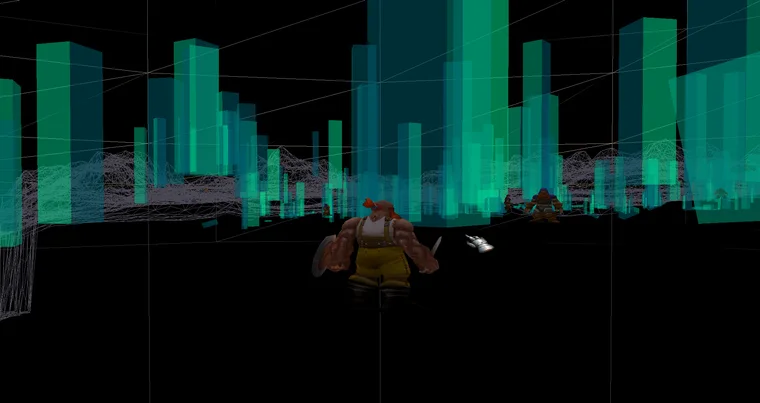
One of my first experiments was deleting the texture of a cow in World of Warcraft. The cow showed up in fluorescent green. When the game is missing a texture, it falls back to a fill color, and that green is chosen on purpose because it appears nowhere else in the game. If someone forgets a texture, the bug jumps out at you the moment you log in, and you know exactly where the problem is.
In an old version of the game, the fill was white instead of green. On a cow, the bug would have been obvious, but the untextured lampposts in Westfall just looked like particles of light. Nobody caught the error because it looked like part of the design. With a fluorescent green fill, they'd have spotted it on day one. Because it was white, it stayed there forever.

It isn't that they can't see the solution. It is that they can't see the problem.
That cow sums up two ideas in this text. The first is that removing a piece from a working system and watching how it reacts is lateral thinking, because you're studying the game by what happens when something is missing, not by looking where you're meant to look. The second comes from the lampposts. The most dangerous bug is the one that looks normal. To catch bugs like that, you need a clear signal that tells you whether the system is working the way it should. You also need to get used to comparing what's happening with what should be happening. I call that comparison differential analysis, and I'll get to it later.
Around that time I also remember using a potion called Noggenfogger Elixir, which let me fall slowly from the sky. I used it to reach parts of the map that weren't finished. I collected Michael Jackson and Stevie Wonder records, and I reverse-engineered things to understand how they worked on the inside. I never really stopped. I've been taking video games apart for almost twenty years now, and these days I build backend systems for a living, with a stint at IBM as a quantum computing researcher along the way. When I got into complex problem-solving, I found out that what I'd been doing on instinct had a tradition behind it. That tradition runs through Edward de Bono, the Maltese physician and psychologist who coined the term "lateral thinking," through the anthropology of rites of passage, and through the complexity sciences.
My thesis is that we need these ways of thinking when we no longer know what to do. There comes a point when there are no best practices, the problem doesn't look like anything familiar, and the cause may be months or thousands of miles away from the effect. That's when you have to think laterally, learn to live in the transition for a while, and distrust any solution that looks too good.
Real breakthroughs come from learning from people outside your discipline.
I have another thesis, and it's a less comfortable one. To learn lateral and liminal thinking you have to get close to hacking, fraud, scams and hustles, and to the ingenuity of people who have no other way out. When they don't know what to do, they invent a new way through. That's where creativity gets practiced for real. If this essay only gave you business cases, you might come away thinking ingenuity is for business problems, when it turns up in every corner of life, mostly once the usual paths stop working.
When I say "complex problem," I mean one that hasn't been solved yet and for which there's no ready-made solution. I learned that definition from my teacher and friend Javier G. Recuenco. Those are the cases where these ways of thinking are most useful.
I've tried to write the thing I wish someone had handed me when I was 16.
Chapter 1
What this is
Lateral, liminal and differential
What follows is about three ways of thinking. The first two help you create. The third keeps you from getting fooled.
I · Lateral thinking
Leaving the usual path
De Bono gave it a name in 1967, in his book The Use of Lateral Thinking. Logical thinking advances step by step in a straight line. Lateral thinking solves the problem indirectly by changing the approach. It looks for alternatives to the obvious route and often reuses something that already existed, giving it a job it was never designed for. To keep this from being just a definition, later in the essay I've gathered a collection of real cases of lateral thinking. You'll see, for example, how a simple marker pen defeated the copy protection on some CDs. At the end you can also get a free PDF with more stories, including one about soldiers who turned a broken missile launcher into a shower and another about how Wise moves money between countries without the money crossing the border.
My favorite example is from 1972. Lyricist Don Black was hired to write the title song for Ben, a horror movie about the friendship between a boy and a killer rat. How do you write a song about a rat without putting people off? Let's be honest, nobody likes rats. Black found the way out. Instead of writing about the animal, he wrote about friendship. A very young Michael Jackson sang it, and it became his first solo number one in the United States.
Black didn't change the assignment. He changed the approach.
II · Liminal thinking
Living on the threshold

The word comes from the Latin limen, threshold. A threshold marks the passage from one state to another, the way the freezing point separates water from ice. That's why we call something subliminal when it sits below the threshold of consciousness.
Social anthropology used the concept first, to describe rites of passage. Arnold van Gennep wrote about them in 1909. A young person is taken away from the group for a while and comes back as an adult. While they're gone, they're no longer a child, but they're not an adult yet either. That in-between stage is what anthropologists called liminal.
We've all been through places like that. The summer between high school and whatever comes next, when you know you'll never see most of your classmates again, is one. Someone who just quit a steady job to start a company is living one too. They're not an employee anymore, and they don't know when they'll count as a real founder. Maybe with the first customer, maybe a year in. With artificial intelligence, it's happening to all of us right now. We know where we're coming from, but nobody knows whether it will transform everything or end up as noise.
A liminal space is one where something has stopped being what it was and isn't yet what it's going to be. From what I've seen, in a company that's often where the real value gets made, because that's when the old pitch stops working and nobody has written the new one yet. Liminal thinking means exploring ideas right in those moments of change. With this much uncertainty around, it gets more useful every year.

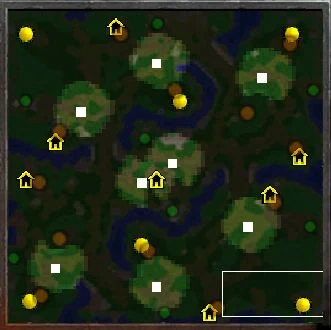
Building something new is exploring a territory without a map. You can have a compass and a direction, but the paths only appear as you move forward, like in the Warcraft III campaigns. The mistake is believing you have a complete map when you're drawing it as you go. Understanding that is the start of understanding the liminal.
That's why, when I'm in one of those spaces, I turn to what's called strategic foresight. The idea isn't to guess what will happen but to explore what could happen and be ready to change course (Cofounder of Wired magazine. More on Wikipedia calls it protopia, getting a little better every day instead of chasing a utopia). I don't assume I know where the market is heading. I work with several hypotheses at once and look for signals that let me drop some and back others. To find my bearings, I lean on what changes least. Writes about money and behavior. Author of The Psychology of Money. His website makes the case in Same as Ever. Technology comes and goes, but fear, envy, greed and the urge to belong still move people the way they did centuries ago.
III · Differential analysis
The antidote
Lateral and liminal thinking have a reputation for cleverness, and that same cleverness can be used to fool you. That's why differential analysis matters so much.
A problem solver specializes in reading signals.
Differential analysis means looking for differences inside a system and deciding which ones deserve attention, whether it's a deviation from the usual pattern, a contradiction or a request that's out of the ordinary. In computing, it's used to compare two versions of a program and see what changed. I use it outside computing too. I try to compare what I expected to find with what's actually in front of me, and it often lets me see the punch coming before it lands.
Why you want all three ways of thinking
Each one answers a different question. Liminal thinking asks what's changing. Lateral thinking asks where the way out is. Differential analysis asks whether this is what it looks like. The first two create and the third protects, and each one on its own leaves a gap that only the other two can fill. The following diagram shows all seven possible combinations, and every zone is a person we've all met, or been at some point.
The idea machine
Has a thousand ways out, none of them at the right time and none of them checked. Gets taken for a ride, or takes other people for one.
The deer in the headlights
Sees the change coming and freezes in the transition.
The cynic
Spots everything and creates nothing. Usually works in consulting, doing "innovation."
The clever one, a step behind
Brilliantly solves last year's problem, and doesn't get fooled once. Perfect answer, wrong year.
The trend chaser
Sees the change and how to ride it, but jumps on every trend or sells it. Mistakes opportunity for hype.
The sharp commentator
Sees the change and doesn't swallow the hype, but builds nothing. Explains it all afterwards. Basically a CEO.
All three
Reads the change, finds a lateral way out and doesn't get fooled along the way.

In practice there are no clean borders between them. Dave Snowden, a Welsh researcher who has spent decades applying the complexity sciences to organizations, uses an image he borrows from Cuban-American philosopher who studies how complex systems work in human behavior. Her Georgetown faculty page. According to her, a complex system is like a bramble bush in a thicket. You walk in and every branch is tangled with the others. You can't tell where one ends and the other begins. I can't completely separate these three ways of thinking. In practice they tangle together for me like that thicket, and underneath all three is creativity, which doesn't have clear limits either.
They're also not three separate skills you can build one at a time and then add up. They have to argue with each other. One questions what another takes for granted, the third finds the flaw, and out of that argument comes an idea none of them would have had alone.
To find your way around inside the thicket, Snowden suggests the opposite of what we were taught. Instead of analyzing until you have the answer and then acting, you launch several small experiments at once, each one able to fail without breaking anything. He calls them safe-to-fail probes. You watch what responds, and you amplify what works while you shut down what doesn't. Some approach the problem from another direction instead of going at it head-on. Before any of that, I usually do one more thing, which I got from Giorgio Nardone, an Italian psychotherapist. I look at what's already been tried, because a lot of the time those very solutions are what keep the problem alive. To spot them, I ask myself how I could make it worse on purpose.
That's where you can see how the three get tangled. Liminal thinking recognizes that something no longer works as it did and that there still isn't a new path. Lateral thinking looks for a way out that wasn't obvious and tests it with small experiments. Differential analysis compares what we expected with what happened, separates signal from noise and decides what deserves to be amplified. They aren't three clean stages, but together they let you move through the thicket without pretending you already know the way out.
Chapter 2
Why now
None of this is new. Resourceful, perceptive and brilliant people have been thinking this way for a long time. What's changed is the terrain. More and more work lands inside the thicket, and most companies are still organized as if the path ran straight.
-
Because we live in the age of process optimization
There's nothing wrong with optimizing. The problem is extreme optimization, the kind that trims everything that doesn't show up in the metric you happen to be watching. I've known companies held hostage by their KPIs. The first thing to go is whatever gives a system slack, like redundancy, people's autonomy, variety or the ability to adapt. In a simple system that saves money. In a complex one, pushing a single indicator to the max can make the whole thing worse, and you almost never notice until it's too late.
Failure doesn't strike like a bolt from the blue. It develops gradually, according to its own logic.
You can see it clearly in the details. For decades, Disney took care of things almost nobody looked at. In 2025 it started putting the World Showcase emblem on Epcot's trash cans with a sticker instead of the usual metal medallion. That same year, at the ticket windows of the Transportation and Ticket Center, it replaced the themed pavement with gray concrete. Each decision makes sense on its own in a spreadsheet, but together they erase what made the place Disney. Fans noticed and complained. In 2026 the new trash cans got their medallion back and the pavement was redone with its pattern.

World Showcase trash cans at Epcot with the emblem turned into a sticker. Photo by WDW News Today. Fast food does the same thing at scale. Pizza Hut gradually dropped its famous red roofs as the business shifted to delivery and less than 10% of sales happened in the restaurant. McDonald's is, to a large extent, a real estate business. It buys or leases the land and the building and then rents them to its franchisees, and some people say that's why its buildings keep getting more generic, because a neutral building resells better than one with McDonald's classic architecture. In both cases a different metric gets optimized, and what's lost is the experience of walking into the restaurant. If every location ends up gray and identical, the only thing telling a McDonald's apart from the hardware store next door is the logo. Some Pizza Hut franchisees are now bringing the red roofs back because they appeal to a growing audience, people nostalgic for how things used to be.
Depriving these systems of volatility, randomness, and stressors harms them.
Not everything is a loss. Amazon, AliExpress and similar sites sell a balloon arch kit that inflates in a minute, when building one by hand takes an afternoon, and the result looks just as good. There, optimizing makes perfect sense, because it saves work without making the deliverable worse. The test I use is simple. If the result is just as good after optimizing, go ahead. If the savings come out of the experience of the person on the receiving end, you're cutting the wrong thing.
Besides, when every company optimizes the same things with the same tools, they all end up looking alike, and then it gets much harder to compete on anything but price. In my experience, jobs built on processes, closed plans and rigid structures punish creativity almost by accident, because any deviation counts as an error. That's why you need to notice the moment when the process stops helping and it's time to rebuild it, which is creative work too.
-
Because many problems are no longer manageable
If you tinker with a complex system, don't expect deterministic solutions.
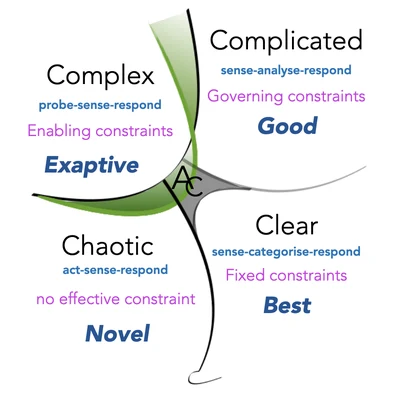
The Cynefin framework. Image by The Cynefin Company (CC BY-SA 4.0). Cynefin, Snowden's framework for classifying problems, takes its name from a Welsh word pronounced roughly "kuh-NEV-in" that means something like the place you belong to. It classifies problems by the relationship between their causes and their effects. One of its key distinctions separates complicated problems from complex ones. In a complicated problem you can turn to expert analysis and known practices. In a complex one, that's not enough. You have to come up with good hypotheses and test them with experiments that won't sink you if they fail. More and more problems are moving from the first group to the second. Design theorist at the University of California, Berkeley. More on Wikipedia and Urban planner at the University of California, Berkeley. More on Wikipedia called them wicked problems. They have no definitive formulation, every attempt at a solution changes them, and there's no way to know when you're done.
In complex problems, the chain of causes is hard to follow. You pay more for flour, and the reason lies in something that happened months earlier on another continent. MIT professor and director of its System Dynamics Group. More on Wikipedia explains it in Business Dynamics, the standard textbook on the subject. The consequences of a decision arrive late, mixed with those of other decisions and distorted by the system's own reaction. By the time the effect finally shows up, nobody knows what caused it.
-
Because knowledge expires
The illiterate of the 21st century will not be those who cannot read and write, but those who cannot learn, unlearn, and relearn.
What you learn about a specific tool stops being useful within a few years. Knowing how to think well, solve complex problems and create new things lasts much longer. That's why I try to accumulate the kind of knowledge that doesn't expire.
My friend Sergio San Juan taught me to tell useful knowledge from valuable knowledge. Useful is knowing how to remove red-eye from a photo in Photoshop. For years it came in handy, but technology moves on, AI does it by itself, and that knowledge dissolves because it stops being useful. Valuable knowledge is something like critical thinking, which doesn't expire and will matter more in ten years than it does today.
-
Because we understand complexity less every year
We train ever better specialists in ever narrower fields. The price is that fewer and fewer people can understand a problem that cuts across several disciplines, and complex problems almost always do.
-
Because this ground is still ours
There are capacities that artificial intelligence still doesn't imitate well, like creativity, the judgment that comes from experience, empathy or a sense of purpose, because they depend on heuristics that grow out of how our brains work. Lateral and liminal thinking are in that group.
An AI guarantees you a seven out of ten, but it guarantees everyone a seven. If everyone has that seven, it no longer sets you apart. To get past that, you have to combine very different kinds of knowledge and experience, and you can only combine what you've accumulated beforehand. Then there's Hans Moravec, a robotics researcher. The paradox is named after him. More on Wikipedia's paradox. A machine finds easy what we find hard, like calculating at full speed, and finds very hard what a three-year-old does without thinking. For an AI to make inferences, you need a power plant. We run on a cheeseburger and fries.
-
Because we already knew how
Humans come with plenty of lateral thinking built in. Spend an afternoon with a five-year-old and she'll surprise you with deductions that adults wave off as cute, and that are lateral thinking in its purest form. Then school and work fill us with linear processes, a kind of mental Taylorism, and that capacity fades. Taylorism is the method Frederick Taylor used to organize factories in the early twentieth century, breaking work into simple, repetitive, timed tasks.
Chapter 3
Why do these ways of thinking make people so uncomfortable?
The first thing I noticed when working with these ways of thinking was that creative, lateral and liminal thinking is uncomfortable. It helps to know why, so you do not mistake that discomfort for a sign that you are doing it wrong.
The thing about lateral and liminal thinking is that you can't buy them. There's no store where you can get more, and you can't put a price on them either. If you pay someone $50 an hour for three days to have an idea, the three days can go by with nothing to show for them.
You can't summon it. Locking yourself in a room for two hours doesn't guarantee you'll walk out with an idea. Ideas show up when the brain connects things it hadn't connected before, and that tends to happen in the shower, on the couch or on a walk. Almost never in the meeting where you needed them.
Worse still, you can't lend it. If you go on vacation, you can't leave your lateral thinking with a coworker so she can keep working on the problem while you're away.
It also stings to see it in others. When someone lands on a solution born purely from lateral thinking, whoever sees it wonders why they didn't think of it, and that hurts.
I've often had to eat my own words, and it's a highly recommended diet.
And finally, keep in mind that it feeds on things that seem to have nothing to do with the problem. I do my worst work when I'm rushed or under pressure. I've learned that I need a place where being wrong is cheap, and that I have to park my usual logic for a while. My friend Jesús Gallent i Pérez, from Nixae, is the opposite. His ideas come to him on a walk, talking with someone beside him.
The flip side is that uncertainty is addictive too. There's something very satisfying about exploring and finding a connection you hadn't seen (serendipity). What kills it is fear. When fear comes in the door, talent goes out the window, so make your mistakes without fear.
De Bono argued that lateral thinking can be trained, and he was right. But training it doesn't guarantee the idea will arrive when you need it. What you can do is prepare the ground so it arrives more often, and that's what the rest of this text is about.
Chapter 4
How to spot someone with lateral and liminal talent
Don't look for one brilliant answer. Look for habits that keep showing up when a strange problem appears. The more of these you recognize in someone, the more likely they are to have lateral and liminal talent.
- These people expose themselves to weird information on purpose. They might keep a list of news from Namibia, read about the problems faced by Arctic explorers or follow people who write in languages they do not understand.
- They collect things, whether records, toys, retro games or stories. Collecting makes them notice small differences and spot what falls outside the norm.
- They've taken apart something they weren't supposed to, whether a video game, an appliance or a rule.
- They question the established order without needing to raise their voice.
- They look for ambiguity instead of settling for the first interpretation.
- They laugh at conventional ideas and at themselves. Humor is a shortcut from a closed mind to an open one.
- They distrust their own assumptions. My own instinct, for example, is to fix everything with technology because I have a programmer's brain, and a lot of the time that's not the way.
- They notice what's out of place, because they know that's where an opportunity usually hides.
- They build on absurd ideas instead of throwing them out, and they rescue ideas that were discarded long ago.
- They've lived. Spanish philosopher and educator. More on Wikipedia (in Spanish) likes to say that a life lived teaches you more than a life thought about, and you can't create much if you haven't lived.
Where the soldier wants to be right, the scout wants to understand.
Behind all this is an attitude. These people read, think and learn without looking down on anyone and without being embarrassed by it. In a team, they prefer useful disagreement to comfortable consensus.
Part 1
The operating system
Five principles
Before we talk about tools, there are five background ideas worth having installed, like an operating system the programs run on later.
Principle 1
Ingenuity lives outside the office
Ingenuity is rarely born in the conference room. It's born out in the real world, in war zones, in hacking, among people who can't afford the normal fix, in forums and in fandoms.
The story that explains it best is about Rodney Jerkins, a music producer known as Darkchild. In 1999 he started working with Michael Jackson on what would become his album Invincible (2001). His first songs didn't win Jackson over, because they sounded too much like what Jerkins was already doing for Brandy and Monica. Jackson told him he had talent, but that he wanted a sound invented just for him, and asked him to set aside his usual sound library and go find other sounds, even if it meant banging on tables.
Jerkins ended up spending hours in a junkyard with his cousin, hitting scrap metal and recording all of it to use as percussion. Another day, while they were driving through New York, Jackson heard a crane coming down and asked him to record that sound. Jerkins had to go back to the studio, borrow a digital recorder, return to the same spot and hope the crane was still there. On that same hunt they put the roar of a motorcycle into a bass line and mixed the sound of a light bulb shattering with a snare, because Jackson wanted one part of a song to sound like electricity.
Jerkins has said that experience changed the way he produces, because he learned to treat any noise as raw material. The lesson applies to any trade. If you only work with the sounds in the studio, you can only sound like the studio. The same goes if you only work with the ideas circulating in your industry. Ingenuity shows up when you change the raw material you think with, and for that you have to go find it where it's practiced.
Principle 2
Reuse what already exists
The most recognizable trait of lateral thinking is giving something old a new use. Snowden calls this kind of reuse exaptation, when something that already exists ends up serving a function different from the one it emerged or was designed for. Gunpei Yokoi, the Nintendo engineer who created the Game & Watch and the Game Boy, called it lateral thinking with withered technology. You take mature, cheap, well-understood technology and use it in a completely new way.
In the late seventies, Sharp and Casio were at war over the calculator market, and there was a glut of liquid crystal displays and cheap chips. On a train, Yokoi saw a man killing time by playing with his calculator. Out of that image came the Game & Watch, a handheld console made from calculator parts. Ten years later he did the same with the Game Boy, which had a black-and-white screen and a processor of an older design. Its rivals had color screens, but the Game Boy was cheaper and its batteries lasted far longer. It outsold all of them by a mile.
You don't need to invent the material. You need to invent the use. And that use is often born of necessity, because people get creative when they're cornered.
Principle 3
Context rules
What makes no sense in one place can be the key in another. Replit, a platform for coding in the browser, launched an app for coding on your phone. In the United States almost nobody used it, because among students the laptop is far more common. In India, many schools don't allow laptops in class, partly because the power grid can't handle that many devices plugged in. The students took to coding on their phones under the desk while the teacher explained something they found irrelevant. That behavior, which nobody had designed, turned out to be a huge market that American investors couldn't see.
Would you put every child of the same age in the same shoe size?
It's the same with problems. You can't copy what Apple did to resolve the conflict in a family business, because complexity always depends on its context. A teacher summed it up well when she said that, with all due respect to Montessori, her theories can't be applied in a classroom at 104 degrees with no air conditioning.

Principle 4
Serendipity takes preparation
Serendipity is finding something valuable you weren't looking for. It looks like pure chance, but often it's what happens when you've prepared for the unexpected. It means paying attention to what's going on at the margins and taking seriously the weak signals other people would dismiss as noise.
I've been lucky to work in places where a hallway conversation was worth more than a lot of meetings. What they had in common was that they mixed very different kinds of people and curiosity counted for more than rank. In that atmosphere, ideas came up that nobody would have had working alone.
A hallway conversation can be worth more than a dozen meetings.
Investor Naval Ravikant, co-founder of AngelList, talks about several kinds of luck. One of them is the luck that finds you because you put yourself in its path. If I finish a talk at a university and someone comes up to offer me a job, from the outside it looks like luck, but I had done my part, which was putting myself out there.
There's a tactic that works for me. I open a side quest without abandoning the main one, and I go looking somewhere else for what the main quest isn't giving me. Often the inspiration I needed for the main thing shows up in the side one.
Principle 5
Whoever names the problem wins
The usual path goes from problem to solution. The lateral path sometimes runs it backwards, starting from a solution that already exists and looking for a problem nobody has named yet.

Listerine was born in 1879 as a surgical antiseptic. For decades it was sold for almost everything, from scrubbing floors to treating gonorrhea, and it didn't stand out at anything. In the 1920s its makers took an almost unknown medical term, halitosis, and turned it into a social problem. Their ads didn't talk about the product. They talked about shame. The most famous one showed a woman who was always a bridesmaid and never a bride, and implied that nobody would marry her because of her breath and that not even her friends dared tell her. Bad breath had always existed, but nobody experienced it as an urgent problem with a name of its own. Listerine christened it and presented itself as the cure. In seven years its annual sales went from about $115,000 to $8 million. The product was the same. What changed was the problem it solved.
- BeforeAn antiseptic for almost anything$115,000
- Seven years laterThe cure for halitosis$8 million
Whoever defines the problem also defines what counts as a good solution, and often positions themselves as the answer. This connects with something an old computer science professor told me years ago. According to him, the goal when you face a problem is to understand it so well that it becomes almost trivial. Intelligence is making a hard problem easy, and stupidity is making an easy one hard. Sometimes a problem stops being one when you tell it to the right person.
This principle has a dark side, which I cover in Part 5.

Part 2 · Central case
How you get into a hacking crew
Around 2006 I was part of Nogg-aholic, a crew devoted to exploring and hacking World of Warcraft.
The name was a nod to Noggenfogger, an in-game elixir that, among other effects, made you fall slowly. If you jumped from a high point with the elixir active, you landed much farther than intended. That let you clear walls and get into parts of the map the developers hadn't finished yet and that nobody was supposed to see.

Over time we built a map editor that let you modify the terrain, place objects or swap out trees, something very powerful for its day. At first we were the only ones using it. When the exploration community grew, we released the program for anyone to use, though without the source code.
Then Blizzard released the game’s first expansion, The Burning Crusade, and our tools stopped working. We could not see textures, edit models or open the new files in the map editor. There was a whole continent to explore and we were blind. The group lost a lot of momentum. The game’s binary formats had changed so much that they required a new phase of deep, complex reverse engineering.
A few days later someone showed up claiming he could edit the expansion's maps with our own editor. We told him he was dreaming. We'd built that editor ourselves and knew exactly how far it went. He sent us a video showing the expansion running, a modified map and our editor open. And he proposed a deal. If we let him into the crew, he'd tell us how he did it.
The trick worked in five steps.
- Start from version
1.12.1of the game, the pre-expansion version we all had installed. - Copy the contents of the expansion's installation CDs to the hard drive, because you can't modify a CD.
- Edit a map in the old format with our editor, which still worked perfectly with
1.12.1. - Slip that modified map in among the expansion installer's files.
- Run the installer. Its job was to convert the old game's files to the new format, so it converted our modified map too.
Every change to a map meant running the installer all over again, and it was painfully slow. But when you love something you put in whatever time it takes. We let him into the crew.
He didn't win the argument. He sent a video.
What this story teaches
It is textbook lateral thinking. They did not attack the problem head-on by rewriting the editor for the new format. They went around it, reusing an existing tool, the official installer, for something nobody had anticipated. They did not write a format converter. They found one that already existed and nobody had noticed. Our narrow, linear view of the problem probably kept us from reaching the same conclusion.
It's also liminal thinking in the literal sense. The trick only exists in the passage from one version of the game to the next, and the installer works like a rite of passage where what goes in old comes out new. He set himself up right on that threshold.
Our first reaction was to tell him it couldn't be done and to insist that the editor was ours. Those are two of the lines that kill creativity fastest, and there we were saying them, the very people who considered ourselves creative.
What convinced us was a video, not an argument. Faced with an extraordinary claim, the sensible thing is to ask for proof. That's differential analysis in action.
What's more, knowing the tool better than anyone was exactly what kept us from seeing the shortcut. Javier Recuenco, the teacher I mentioned at the start, says other people's problems always look like they have an obvious solution and your own never do, and that almost everyone connects the dots after the fact.
The way you got into the crew teaches something too. There was no selection process. It wasn't a factory where you feed parts in one end and a car comes out the other. You got in through non-linear paths, by showing up where interests overlapped, by showing something nobody else knew how to do, and by appearing at the right moment. I got in much the same way, discovering a hidden area of the map by deleting the model that covered it.

Twenty years later, what happened around that elixir is still my favorite example of an emergent property, meaning something that arises from the system without anyone having designed it. The slow fall was designed. What nobody could have imagined was that it would be used to sneak into unfinished zones, that videos with tens of thousands of views would come out of it, and that communities would grow around those videos, followed by forums and later Discord servers. And nobody would have guessed I'd still be telling it twenty years later.
I've been collecting stories like this for twenty years. The ones that didn't fit in this essay are in a PDF I can send you.
Part 3
The killers
And how to disarm them
There are phrases that, said in a meeting, kill any creative process on the spot, and they drive me up the wall. For these processes to work, people have to be able to speak without feeling judged and accept that they're going to be uncomfortable for a while.
Killer 1
"That can't be done"
On October 9, 1903, after Samuel Langley’s machine had failed, The New York Times published the editorial “Flying Machines Which Do Not Fly.” In a mocking tone it suggested that a machine capable of flight might take between one and ten million years to appear. It was not a scientific calculation. It was a rhetorical comparison with the time birds had taken to evolve. Sixty-nine days later, on December 17, the Wright brothers made their first powered flights at Kill Devil Hills, near Kitty Hawk.
When I find myself there, changing the question helps me. Instead of asking whether it can be done, I ask what would have to be true for it to be possible. And if the environment allows it, there's the mischievous version. If they say it can't be done, maybe you should do it and then say it was an accident.
Also be wary of anyone who sees it crystal clear from the outside. Publisher of Forbes magazine. More on Wikipedia used to say it's much easier to suggest solutions when you don't know much about the problem. And if you want to make the wrong decision, ask everyone.
Killer 2
"This is how it's always been done"
Comfort feels great, and what has always worked seems like it always will. In 1912, the British rule on how many lifeboats a ship had to carry dated from 1894, and its top category was ships of over 10,000 tons. The Titanic was over 46,000. It carried 20 boats, more than the law required, with room for about 1,200 of the more than 2,200 people on board. Nobody broke a rule. The rule simply hadn't grown with the ships.
Often, behind "this is how it's always been done" there's something more uncomfortable. Changing means admitting we were doing it wrong. Ignaz Semmelweis, a Hungarian doctor at Vienna General Hospital, proposed in 1847 that doctors wash their hands in chlorinated water to reduce infections in their patients. His proposal met a lot of resistance, partly because it implied that the doctors themselves might be transmitting whatever was killing their patients. Almost always, the tallest mountain to climb is our own resistance to change.
The Titanic was fully up to code.
Here lateral and liminal thinking have the upper hand, because when something is new there's no "always" to appeal to. Deliberately try an approach where tradition doesn't apply. You can deny reality all you want, but in the end it bites you.
Killer 3
"I did my part"
This one is very programmer, and very every-man-for-himself. Everyone sticks to their own corner of the problem ("I shipped my part," "that's not my ticket") and nobody looks at the whole thing. It has two close cousins, "what's in it for me?" and "I said that three years ago."
It's usually a symptom of a poisoned environment, where some people want to push the problem onto someone else without changing it, and where more energy goes into talking about the problem than into solving it.
We are not together for the sake of being together, but to do something together.
To disarm it, steer the conversation back to the problem and away from who gets credit. The best ideas tend to show up right on the border between two people's corners. And when someone disagrees with you, instead of explaining why you're right, ask why the two of you see things differently. It's usually far more productive.
Killer 4
The rigid environment
Without flexibility or room to experiment, creativity suffocates. It's common, because process optimization punishes any deviation, including the good ones.
What I've seen work is creating protected spaces. That's what companies are after with internal hackathons, offsites, design thinking sessions or skunk works teams, small groups that work with total freedom outside the usual structure. But keep in mind that flat structures favor creativity, and you still need hierarchy to run complex operations well. You don't pick one for good. You learn when each one is called for.
Killer 5
Self-censorship
It means dropping your own idea before saying it out loud, out of fear of what people will think, because you might blow it. It's the quietest killer, because it leaves no trace and the idea dies without anyone knowing. On top of that, one criticism can outweigh several compliments put together.
It helps a lot to separate the moment of generating ideas from the moment of evaluating them. Ferran Adrià, the chef behind elBulli, insisted on not mixing the creative process with production, because creativity is one thing and production, execution and strategy are another. Bronnie Ware, a palliative care nurse, wrote down what people regretted at the end of their lives. It was almost never what they had done. The most common regret was not having had the courage to live life their own way.
Killer 6
The pressure for results now
Ideas need time to ripen, and rushing pushes you to settle for the first reasonable option, which is almost never the lateral one.
The last thing to grow on the tree is the fruit.
The way out is to pace yourself. Ferran Adrià himself admitted that, if he could go back, he'd go slower and spread the creativity out with more strategy. He also said to sleep, because a rested brain is a more creative one.
Killer 7
Copying without understanding
If you want to create, don't copy for the sake of copying. Reusing something and taking it somewhere else is not the same as copying a solution line for line because it worked for someone else. And creativity has to go hand in hand with quality. I'd even put quality first, because if you do things well you've already covered most of the distance. Even the janky stuff has to be done well.
Part 4
The toolbox
First of all, diagnose
Knowing what kind of problem you have is the starting point, partly because the team and the way you approach it follow from that. This flowchart helps me choose how to think in each case.
Are there good practices that work?
Follow the manual Don't make up steps.
Are you in the middle of a transition, something that has stopped being what it was and isn't yet what it will be?
Liminal Explore the threshold. What value is born between the two states?
Are you stuck on the obvious path?
Lateral Step outside the frame. Provoke, invert, reuse.
Before you jump, always
Is someone offering you a solution that's clever, urgent or plays on your emotions?
Differential analysis Look for the difference, question the premise and check the source.
Plans are worthless, but planning is everything.
In complex problem-solving we usually arrange the ways of solving problems along a spectrum. At one end sits pure strategy, with authors like Professor of strategy at UCLA and author of Good Strategy / Bad Strategy. More on Wikipedia. In the middle, pragmatic problem solving, with Change, by Paul Watzlawick, John Weakland and Richard Fisch, and Nardone's work on what we call the human factor, which covers everything to do with people's emotional behavior. At the other end is De Bono's creative spark. The flowchart tells you which end to move toward.
 Richard RumeltProfessor of strategy, UCLA
- ChangeWatzlawick · Weakland · Fisch
 Giorgio NardonePsychotherapist · the human factor
 Edward de BonoLateral thinking
Keep in mind that exploring the problem and exploring the solution are two different jobs. And that all a problem solver can do is put forward the best possible hypothesis with the data and the time they have. Economist and cognitive scientist. Won the Nobel Prize in Economics in 1978. More on Wikipedia had a name for this, satisficing. You don't look for the perfect solution, because it doesn't exist. You look for one that's good enough to take the next step and still leaves you room to correct course.
Tool 01
Provocative questions
De Bono proposed asking yourself deliberately absurd questions to break your thinking patterns. For example, what would happen if we could walk on walls. The question doesn't have to be realistic. Its only job is to get you out of the lane you always drive in.
Tool 02
The six hats
This is another De Bono technique, and I went through it in Málaga when I worked at Audiense. The group keeps switching hats, and for a while everyone approaches the problem in the same way. White handles the data, red the emotions, black the risks, yellow the upside, green the new ideas, and blue runs the conversation. Switching hats forces you out of the role you fall into by habit.
The point is to work through the same problem several times and force yourself to change approach. If you only use one, every story is incomplete.
Tool 04
A diet of weird information
For the brain to jump from the familiar to the uncomfortable, you have to feed it things that aren't part of its usual diet. It could be following the news from a country you know nothing about, learning how a trade that has nothing to do with yours works, or peeking into communities that speak languages you don't understand. The Darknet Diaries podcast, customs documentaries and traffic-stop shows are factories of ingenuity, the good kind and the bad kind. I have an odd habit. I walk into a bookstore, grab books at random and read only the first paragraph of each.
Tool 05
Leave the studio
This is the lesson of Darkchild and the crane from Principle 1, turned into a habit. If all your ideas come from the same tools and the same sources everyone in your industry uses, your results are going to look like theirs. Jerkins himself has complained that many of today's producers use the same sound packs and end up sounding the same. Look for raw material that nobody has pre-selected for you, then turn it into your work.
Tool 06
Learning backwards
In the late eighties, chess player Maurice Ashley started coaching the Raging Rooks, the team from a public junior high school in Harlem. In 1991 they tied for first place at the national junior high championship against elite private schools like Dalton, which had won three titles in a row. Organizational psychologist Adam Grant tells in Hidden Potential how Ashley, who years later would become the first African American grandmaster, did it. Instead of starting with openings, as almost everyone does, he taught them chess backwards, starting with endgames. If you know where you want to end up, you handle the middle better, and along the way you train patience, planning and resilience.
It's worth asking what would happen if you started your own problem from the end.
Tool 07
Reading two worlds at once
Sometimes value appears between two familiar ways of doing things. Rent the Runway and Vivrelle noticed two things at the same time. On one hand, lots of people love fashion and pile up clothes and handbags. On the other, luxury is expensive and scarce by definition. In the space between buying and renting, they built a subscription that lets you carry an $1,800 handbag for a month for a small fraction of its price and then send it back. You don't fill your closet, you feel like you belong to that world, and you're always wearing something new.
Tool 08
Copying nature instead of the competition
Biomimicry means watching how nature solves a problem and carrying the solution over to a human one. The mussels that keep watch over Warsaw's water, which I cover in the archive, or the beehives that protect crops from elephants, which are in the PDF, are examples. The solution already existed. It just had to be taken somewhere else.
Tool 09
What the customer is really buying
There's a phone mount that holds a ball above the camera so your dog looks at the lens when you take a picture together. Whoever buys it isn't after a mount, they're after a nice memory of the two of you looking at the camera. In the same way, whoever bought Listerine wasn't buying antiseptic, they were buying social acceptance. Always ask yourself what exchange of value is really behind what you sell.
It's what in complex problem-solving we call the human factor, the set of ways of staying realistic about human behavior, where emotions carry a lot of weight inside a complex system. We're irrational in fairly predictable ways.
Tool 10
The deep-thinking question
I start every class with a question of this kind. Some have an answer or a story behind them and others are open-ended. They're there to get the group digging into a problem together. And if someone reaches the answer I had in mind without knowing it beforehand, they earn all my respect. There's a collection further down.
Tool 11
Writing to think
Luri also says that writing is a way of having ideas. You don't write down what you've already thought. You think while you write. When you get stuck, start writing about the problem and let the ideas change as you go.
My friend Sergio San Juan, who comes back to this idea a lot in his Spanish-language newsletter, Aprendizaje Infinito, is the one who pointed me to Paul Graham. Graham says writing doesn't just communicate ideas, it generates them. They aren't ready before you sit down at the page. They show up as you write. Writing forces you to clarify what you think you know, exposes gaps in your reasoning and helps you make decisions.
Tool 12
Idea-generation techniques
They don't guarantee the idea will come, but they get you closer. There's one exercise that works very well. Any object, say a glass, gets passed from hand to hand around a circle, and each person has to say what it could be used for, without repeating anything said before. The first few say the obvious. From the fifth or sixth person on, the group starts exploring the edges. In my experience, games like this create a climate where being wrong costs nothing.

Part 5
The dark side
Cleverness put to work for deception, and differential analysis
Some of the places with the most lateral thinking are fraud, scams, smuggling and greenwashing. And a lot of it comes wrapped in social engineering.
So if you practice lateral thinking, you also need its antidote.
How to practice differential analysis
- Look for differences in the system and decide whether they're striking or normal.
- Question the premises. Ask yourself who named this problem and what they gain from it.
- Try to understand what motivates whoever is telling you the story.
- Notice what's out of the ordinary, like analogies that don't fit, odd requests or unjustified urgency.
- Distrust urgency and fear. If someone plays on your emotions or rushes you, they may be running social engineering on you. In meetings there will always be people with their own agenda trying to pull you onto their turf.
- Look for inconsistencies, contradictions or gaps in the logic.
- If it isn't clear to you in the moment, stop and verify the source before going on.
Like lateral thinking, differential analysis can be trained. And there are three traps that people who practice it tend to fall into.
The first is the streetlight effect. It comes from the joke about the drunk looking for his keys under a streetlight who, when asked whether he lost them there, says no, but this is where the light is. We tend to look where it's easy to look, not where the answer is.
The second is the comfortable prejudice. It's easier to believe what you already thought than to untangle reality, and any observation admits several interpretations. Economist and Financial Times columnist. Author of The Data Detective. More on Wikipedia suggests starting by noticing how a statistic makes you feel, because the one that proves you right is exactly the one you're least likely to check. AI works the same way. Depending on how you phrase the question, it hands you back your own opinion, better written. If you want it to help you think, ask it to argue against you.
The goal of disinformation isn't to make us believe something. It's to make us believe nothing.
The third is the easy conspiracy. Convincing conspiracy theories usually lean on a grain of truth, and it's worth keeping Hanlon's razor handy. Never attribute to malice what is adequately explained by stupidity.
Six cases to sharpen your eye
A bouquet held upside down
Former FBI agent and expert in nonverbal communication. More on Wikipedia tells of a case where they were following an espionage suspect without finding anything to charge him with. Security footage showed him leaving a flower shop, and nobody on the team saw anything odd except Navarro. In the United States, people hold a bouquet by the base with the flowers pointing up. This man carried it upside down, held behind him, the way it's done in Eastern Europe. That detail opened up the investigation, and when they explained it to him, the spy confessed.
146 kilos of gold shaped like screws
At Hong Kong airport, customs intercepted 146 kilos of gold molded into screws and cylinders so they would pass for air compressor parts, and painted so they wouldn't shine. They were bound for Japan, and the goal was to dodge the import tax. The smugglers did lateral thinking. The officers who caught it did differential analysis, and that takes ongoing training.
Payment terminals with an extra board inside
In a Hacker News comment, someone who worked in card payments said they were getting payment terminals from China with an extra board hidden inside to send out card data. It wasn't a state-sponsored attack. Someone, most likely a bribed employee, was modifying them on the production line before they were sealed. Once a terminal was closed, its anti-tampering mechanism kicked in and opening it made it useless, so they couldn't look inside. They started weighing them. The attackers found out and scraped plastic from the inside so the extra board wouldn't show up on the scale. So he built a fixture that held a terminal in two different positions and measured how it behaved when rotated, which depends on how the mass is spread out inside. If two units weigh the same and rotate the same way, they have to be the same inside. They couldn't measure everything, but it was enough to measure something the attacker didn't know they were measuring.
A gift-shop pin in the VIP section
The 2016 Champions League final, the biggest club game of the year in European soccer, was played at the San Siro stadium in Milan. An Italian named Gaspare Galasso showed up at the VIP entrance with his hair slicked back and a suit on, wearing a "credential" he'd put together from a pin bought at the official store and a plastic badge holder. When they asked for his ticket, he asked them, with total confidence, how they could possibly be asking him, of all people, for a ticket. The security guard apologized. Galasso watched the match from the VIP box, posed for photos with the president of Real Madrid, the team that won, and ended up at the celebration next to the trophy. More guards wouldn't have stopped him. A rule that no single guard gets the final say would have.
A German shepherd in Kinshasa
Before the 1974 fight against Muhammad Ali in Kinshasa, in what was then Zaire, George Foreman arrived with his German shepherd, Daggo. It was the breed used by Belgian colonial police against the local population, and Ali made sure to remind people. That detail may have reinforced support for Ali, who was already very popular with the local crowd. Sometimes a small signal changes how everything else is read.
The hum of the power grid inside a video
There's a forensic technique, electrical network frequency analysis, that can help estimate when a video was recorded and, in some cases, on which power grid. Lights and screens flicker to the rhythm of the current, and that rhythm varies slightly over time. By comparing the flicker in the video with reference records, you can extract information about the recording. A difference invisible to the naked eye ends up leaving a clue.
The ethical line
The Listerine case sits right on the line. Naming a real problem that people suffered without talking about it is creating a new category. Manufacturing an insecurity in order to exploit it is manipulation. A good part of the fear industry lives off the second. The line isn't only about whether the problem existed. It's also about how much you exaggerate it and what you promise in return.
And the idea can be used in reverse. When someone presents you with an urgent problem and, in the same package, offers you their solution, ask yourself who named that problem and what they gain from it.
Questions
Deep-thinking questions
Think for a while before opening each answer.
01Every year, the winner of the Ballon d'Or, the prize for the best soccer player in the world, seems to leak on Twitter about two weeks before the official announcement. How?
The explanation that goes around runs like this. There are networks of accounts that specialize in gathering followers from a fandom, say Taylor Swift's, by posting videos and memes that get shared a lot. About two weeks before the announcement, those accounts publish, as paid ads, every possible combination ("X wins the Ballon d'Or," "Y wins the Ballon d'Or") and target them at far-off audiences, in Mongolia for instance, where nobody will interact with them. The ads don't show up in their followers' timelines. When the winner is announced, the network spreads the tweet that got it right, saying they knew all along and that soccer is a mafia, and deletes the rest. It looks like a leak. It's really a bet on every option at once.
02Why is Europe having such a hard time making more ammunition for Ukraine?
You have to pull the thread. The gunpowder in ammunition is made from nitrocellulose, and nitrocellulose is made from cotton fiber. Europe barely produces any cotton, and in 2024 Rheinmetall's CEO explained that more than 70% of what European manufacturers used came from China. Whoever controls the cotton has a lever on Europe's military capacity. And we've only looked at cotton. If we did the same with aluminum or titanium, more dependencies would show up. That's how deep a complex problem can go.
03How would you fly in a video game that has no flying mechanic at all?
By swimming. Early versions of World of Warcraft didn't check whether you were actually underwater. If you sent the server a message saying you were diving, the swimming mechanics kicked in even if you were in midair. Swimming through the air is, for all practical purposes, flying.
04During COVID, some people in China protested with signs covered in equations. What were they trying to say?
They were the Friedmann equations, which describe the expansion of the universe. Say "Friedmann" out loud and it sounds a lot like free man. In a country where the right to protest isn't guaranteed, they were asking for freedom with cosmology equations.
05December 1998. Michael Jackson is going to sing at the opening of the Royal Towers at the Atlantis hotel in the Bahamas, and Stevie Wonder will be with him. You're a fan and you want to sneak in. How do you do it?
The story goes that some fans had their picture taken with the tour staff a few days earlier, copied the design of their passes and printed their own. That's social engineering combined with imitation. There was another, much more boring way, which was to get a press credential. From the differential analysis side, the interesting question is which check would have caught those fake passes.
06Which freezes first, hot water or cold water?
Almost everyone says cold. But under certain conditions hot water freezes first, and that's called the Mpemba effect. Several causes have been proposed, such as more evaporation, fewer dissolved gases or internal currents that cool it faster, and it's still debated. It's a good test of differential analysis, because what you observe can clash with what you expected to find. To see contradictions like that, you have to be willing to observe even when what you see clashes with what you believe.
Archive
Lateral thinking in action, told through real cases
Stories of street smarts, ingenuity, the human factor and hacking, with their sources
I've been collecting these stories for years. Finding lateral thinking genuinely applied is as hard as finding real cases of complex problem-solving, but my hobbies and my work have often put me in the right place to pick them up.
Lateral
A felt-tip marker versus Cactus Data Shield
In the early 2000s, some record labels protected their CDs with systems like Cactus Data Shield or Key2Audio. Computers first read an area of the disc with the table of contents, while CD players go straight to the tracks, so the labels put bogus data in that area. The disc played in a CD player, but a computer couldn't read it or copy it. In 2002 it came out that all you had to do was color the outer ring of the disc with a marker pen, or cover it with tape, and the drive would skip that area. A protection that looked solid fell to office supplies.
Eight mussels with sensors glued to their shells
Warsaw's water utility monitors its water with eight mussels that have sensors glued to their shells. If six of them stay closed for more than four minutes, an alarm goes off and technicians analyze the water. The biosensor already existed. It just had to be wired up.
A Mercedes as a boardroom
In September 2010, María Teresa Rodríguez, the matriarch of Galletas Gullón, a Spanish cookie maker, was barred from entering the offices of her own company. She gathered her daughter and another shareholder inside a Mercedes, with a notary taking the minutes, and held a shareholders' meeting right there in which she removed the board that was blocking her. The Spanish companies registry ended up recording the resolutions and she regained control. The business daily elEconomista told the story.
- No. 01Two transfers instead of oneIn the PDF
- No. 02Smoke and lasers at DisneyIn the PDF
- No. 03A Javelin with a showerheadIn the PDF
- No. 04A magnet that puts the DS to sleepIn the PDF
- No. 05Steps painted pinkIn the PDF
- No. 06Beehives versus elephantsIn the PDF
- No. 07Rice and a bunnyIn the PDF
- No. 08The card that turns off the lightsIn the PDF
- No. 09A pipeline against RockefellerIn the PDF
- No. 10The Sims with no billsIn the PDF
Liminal
A spell that escaped the dungeon
In 2005, a spell cast by a World of Warcraft boss that was supposed to stay inside a dungeon escaped into the cities through players' pets and caused a game-wide epidemic. Real epidemiologists ended up studying it and published their conclusions in The Lancet Infectious Diseases, because virtual worlds are small laboratories of human behavior where a small cause can have enormous effects.
Differential and dark side
Invisible dots in every screenshot
Around 2010, some friends of mine who did reverse engineering discovered that World of Warcraft hid in its screenshots an almost invisible pattern of dots containing the account ID, the server address and the time. If someone posted a screenshot of themselves cheating on a forum, Blizzard could tell who had taken it. The trick went public in 2012 on the OwnedCore forum and PC Gamer picked it up.
Satellite dishes with a few seconds' head start
In 2024, police broke up a ring in Spain that used large satellite dishes to pick up the live feed of matches from around the world before it reached the betting sites. With those few seconds of advantage, and using dozens of young people as the account holders, they bet on sure things.
- No. 11The same sign-off on every messageIn the PDF
- No. 12A court-ordered ankle monitor on a petIn the PDF
- No. 13A thousand captchas for a dollarIn the PDF
Music, creativity and people
A crane recorded on a New York street
The producer who had to go out and record a crane in New York. It's in Principle 1.
Ferran Adrià's three rules at elBulli
Creating means not copying, you shouldn't mix creation with production, and creativity is best paced.
A friendship song for a killer rat
When the subject of the assignment is impossible, change the subject without changing the assignment. It's in Chapter 1.
A windowed desktop on the MSX, thanks to the chip everyone called slow
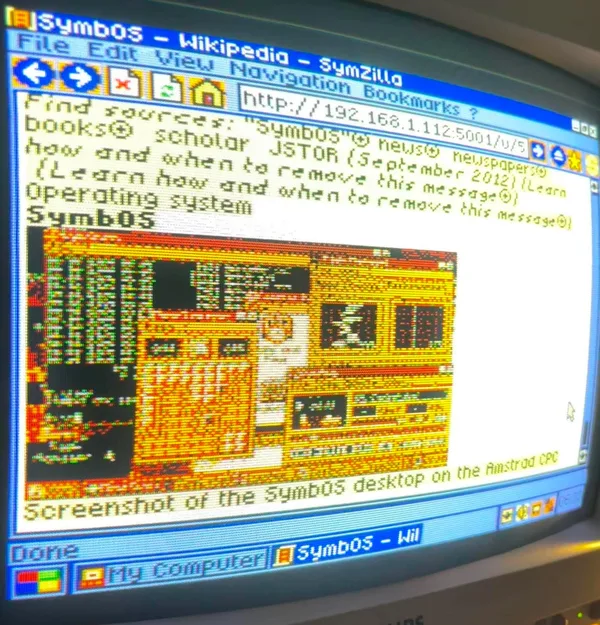
My friend Carlos Milán Figueredo told me this one. He's a Solutions Architect at AWS and the sysop of HispaMSX, a message board for the MSX community, the kind people dialed into before the internet. On an MSX, everything you see on screen goes through a separate graphics chip, and the processor can't draw anything itself. So the community took it for granted that you'd never drag windows around smoothly on an MSX, the way you do on Windows. In 2006, Prodatron, who had built SymbOS, that same kind of windowed system, for the Amstrad CPC (another home computer from those years), asked for help on the msx.org forums to bring it over to the MSX. People warned him the chip was slow. He saw it the other way around, as a graphics card the Amstrad never had. By the end of that year it was running, and today some people browse the web with it on an MSX.
Never published before

Closing
Living with the discomfort

Creative thinking draws us in because it brings to light threads that were there all along but we couldn't see, and it helps us separate signal from noise. But it has a price, and that price is discomfort. You can't buy it, you can't summon it, you can't lend it, it sometimes stings to see it in others, and it almost never shows up when you need it.
There is no recipe that makes a lateral idea appear when you need it. You can fill your head with different material, leave room for error and learn to tolerate uncertainty without rushing towards the first answer. The rest happens when it happens.
Chesterton, the same one from the top of this page, wrote that fairy tales don't give kids the idea that monsters exist. Kids already have that. What fairy tales give them is the idea that the monster can be beaten. Cracks don't always need beating. Some are worth a good look before you patch them.
If there's something you're weirdly into, the way I was into deleting textures from cows, keep at it and show it to people. This website is me doing that. And ask for help when you're stuck.
I hope you see a few things differently now. Thanks for reading this far.
Carlos
To keep pulling the thread
Resources
Books
- The Mechanism of Mind, The Use of Lateral Thinking, The Five-Day Course in Thinking, Lateral Thinking: A Textbook of Creativity, Lateral Thinking for Management, Edward de Bono
- Explore/Create: My Life in Pursuit of New Frontiers, Hidden Worlds, and the Creative Spark, Richard Garriott
- The Creative Habit: Learn It and Use It for Life, Twyla Tharp
- The Creative Contrarian: 20 "Wise Fool" Strategies to Boost Creativity and Curb Groupthink, Roger von Oech. Very useful if you don't know much about group dynamics, because it comes with a whole battery of exercises.
- Undercurrents: The Hidden Wiring of Modern Music, the book from The Wire magazine that introduced me to the undercurrents.
- Range: Why Generalists Triumph in a Specialized World, David Epstein
- Good Strategy / Bad Strategy, Richard Rumelt (the other end of the spectrum)
- Change: Principles of Problem Formation and Problem Resolution, Paul Watzlawick, John Weakland and Richard Fisch (the middle of the spectrum)
Concepts and authors to keep pulling the thread
- Gunpei Yokoi and lateral thinking with withered technology
- Dave Snowden and Cynefin
- Ferran Adrià on creativity
- Naval on the kinds of luck
- Joe Navarro on nonverbal communication
- Unmesh Joshi, Gitanjali Venkatraman and Martin Fowler on the expert generalist, people who go deep in at least one field and pick up unfamiliar ones fast
For research
- ERIC (eric.ed.gov), JSTOR and Google Scholar, to look for papers on lateral thinking
- The Darknet Diaries podcast, a deep well of ingenuity, the good kind and the bad kind
- Disney Research, where Disney's imagineers publish their work
Sources
Notes and sources
This essay brings together material from my lateral and liminal thinking courses, which I have taught in English and Spanish at companies around the world, as well as my own professional experience.
Preface and chapter 1
- The untextured cow. Creating my own WoW, karliky.dev, 2006.
- Don Black and the song "Ben." Ben (song), Wikipedia, Songfacts.
- Snowden and Juarrero's bramble bush. Dave Snowden and Mary Boone, Bramble Bushes in a Thicket, Phronesis podcast.
- Safe-to-fail probes and exaptation. Dave Snowden, Safe-fail probes, The Cynefin Co., and Exaptation, cynefin.io.
- Nardone's attempted solutions. El modelo de Problem Solving Estratégico, Redalyc (in Spanish).
- Morgan Housel, Same as Ever, Portfolio, 2023. Rites of passage, Arnold van Gennep, The Rites of Passage (Les Rites de passage, 1909).
Chapters 2 to 4
- Dietrich Dörner, The Logic of Failure (Die Logik des Misslingens, 1989).
- Nassim Nicholas Taleb, Antifragile, 2012.
- Disney's trash cans and pavement. WDW News Today and BlogMickey, 2025, Disney Food Blog, 2026.
- Pizza Hut's roofs. Mashed, Franchise Times.
- McDonald's and its real estate model. Harry J. Sonneborn, Wikipedia.
- John D. Sterman, Business Dynamics: Systems Thinking and Modeling for a Complex World, McGraw-Hill, 2000.
- The line about the illiterate of the 21st century is Herbert Gerjuoy's, quoted by Alvin Toffler in Future Shock (1970). Origin of the quote.
- Moravec's paradox. Wikipedia.
- The scout and the soldier. Julia Galef, The Scout Mindset, Portfolio, 2021.
- The Chesterton quote at the top is from "The Point of a Pin," in The Scandal of Father Brown (1935). The fairy tale line in the closing is from "The Red Angel," in Tremendous Trifles (1909).
- Horst Rittel and Melvin Webber, “Dilemmas in a General Theory of Planning,” Policy Sciences, 1973. Wikipedia.
Part 1
- Darkchild and Michael Jackson. Damien Shields, interview in inkl, Yams Magazine, 2025, Rated R&B, 2022, Lessons from Legends feat. Rodney "Darkchild" Jerkins, The Almanac of Rap.
- Gunpei Yokoi and withered technology. Wikipedia, Reynolds, The Vitruvian Thumb, Game Studies.
- Listerine and halitosis. Wikipedia, Reader's Digest.
Part 3
- The editorial "Flying Machines Which Do Not Fly." Wikipedia, The New York Times, October 9, 1903.
- The Titanic's lifeboats. Lifeboats of the Titanic, Wikipedia.
- Ignaz Semmelweis. Wikipedia.
- Bronnie Ware, The Top Five Regrets of the Dying, 2011.
Part 4
- "Plans are worthless, but planning is everything," Eisenhower, 1957. Quote Investigator.
- Edward de Bono, Six Thinking Hats.
- Maurice Ashley and the Raging Rooks. Adam Grant, Hidden Potential, Viking, 2023, Wikipedia.
- Warsaw's mussels. Snopes.
- Charlie Munger and the man who wanted to know where he would die. Poor Charlie's Almanack.
- Herbert A. Simon, “Rational Choice and the Structure of the Environment,” Psychological Review, 1956. Wikipedia.
Part 5
- Joe Navarro and the bouquet. interview on The Diary of a CEO.
- The Hong Kong gold. Hong Kong Customs, April 2024.
- The tampered payment terminals. Hacker News.
- Gaspare Galasso at the San Siro. Milano Events, 2016.
- Foreman and his German shepherd. The Rumble in the Jungle, Wikipedia.
- Electrical network frequency analysis. Wikipedia.
- Tim Harford, The Data Detective (How to Make the World Add Up), 2020.
Questions and archive
- The Friedmann equations at Tsinghua. Language Log, Vice.
- Cotton and ammunition. Defence Matters, Hürriyet Daily News.
- The Atlantis opening in 1998. Atlantis Paradise Island, Wikipedia, setlist.fm.
- The Mpemba effect. Wikipedia.
- The Gullón shareholders' meeting. elEconomista, 2010.
- Corrupted Blood. Wikipedia, Lofgren and Fefferman, The Lancet Infectious Diseases, 2007.
- SymbOS on the MSX. Prodatron's thread on msx.org, May 2006, and Wikipedia.
- The ankle monitors on animals. Telemadrid.
- The bets with satellite dishes. Infobae, 2024.